Overview
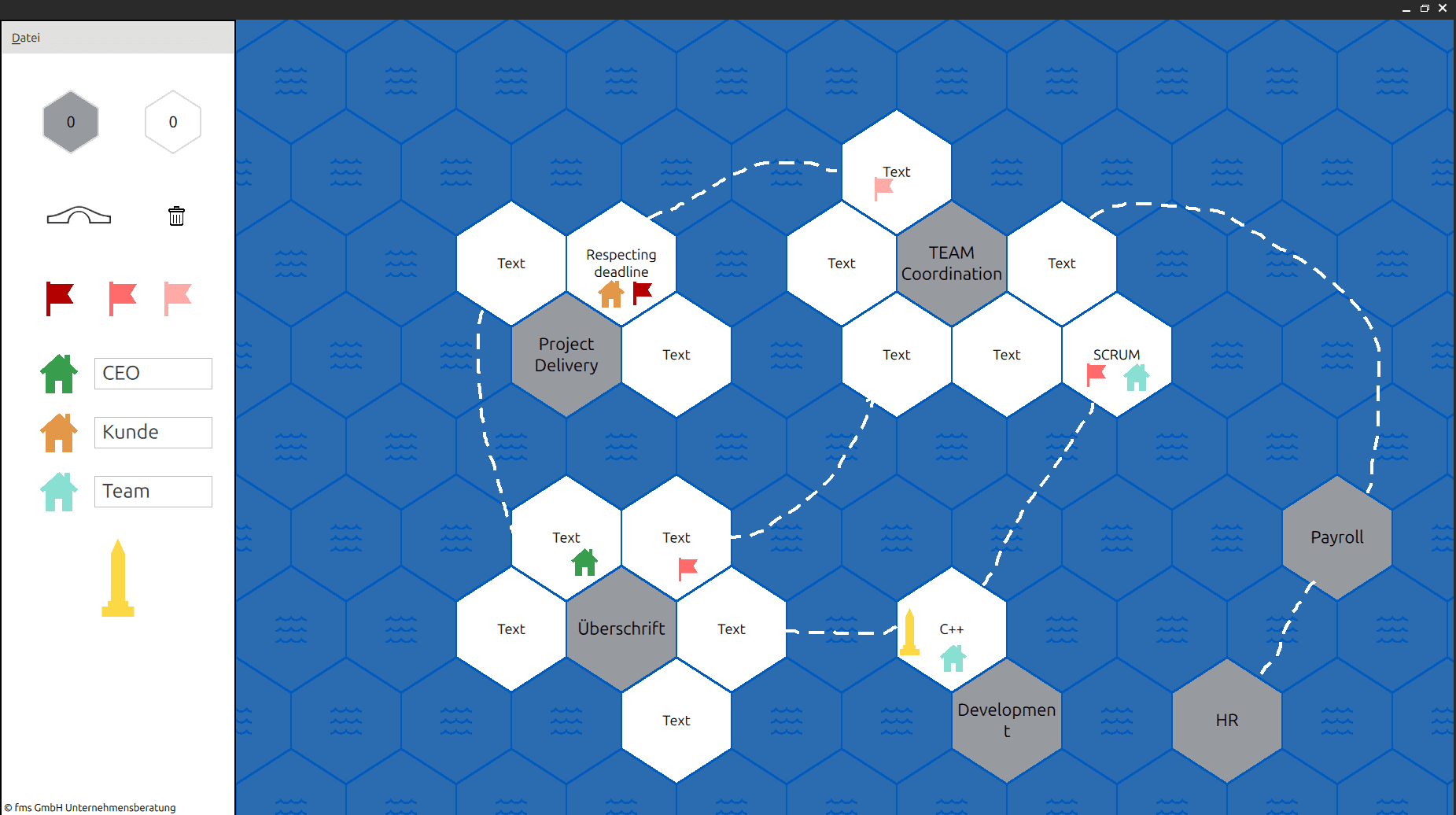
This project involved building a dynamic visual interface where users can explore, drag, and organize topics across a hexagonal grid, simulating a map-like coaching experience. The primary goal was to deliver a compelling visual layer backed by a structured Python-based backend, offering both interactivity and persistence. Designed with responsiveness and clarity in mind, this application demonstrates the power of combining QML for UI with Python for logic and state management.
Challenges and Learnings
The core challenge was building an intuitive drag-and-drop experience within a hexagonal layout while preserving accurate snapping, layering, and state control. Implementing smooth zooming and camera panning required precise matrix transformations, especially when scaling around the cursor. Bridging frontend interactivity with backend logic in a modular, extensible way deepened my architectural expertise and reinforced the value of clean separation between logic and interface.
Outcome
The final result is a visually rich, highly interactive map that can serve coaching, learning, or simulation tools. The blend of visual aesthetics and backend structure provides a solid foundation for expanding features such as user-specific content, progress tracking, or network-based collaboration. This project is a great example of how thoughtful UI architecture and fluid drag-and-drop mechanics can enhance digital experiences.